Overview
Water main installation carries a different kind of pressure than sewer work — literally. A domestic or recycled water system operates under continuous pressure, which means every joint, valve, and connection has to hold long after the trench is backfilled and the crew has moved to the next job. We install and tie in domestic and recycled water mains, services, valves, and hydrants for general contractors, developers, and municipalities across Southern California, built to pass agency acceptance testing the first time — because a pressure test failure on water main work usually means digging the trench back open.
Water work also means coordinating tighter around what's already in the ground. Water mains typically share trench corridors with gas, electric, and telecom, and separation requirements between potable water and sewer lines are strict for good reason. Before we cut pipe, we confirm horizontal and vertical separation against everything else in that trench, not just against what the plan set assumes is there.
What We Install
Domestic water main installation and tie-ins, sized and routed to approved plans
Recycled ("purple pipe") water main installation for irrigation and dual-plumbed systems
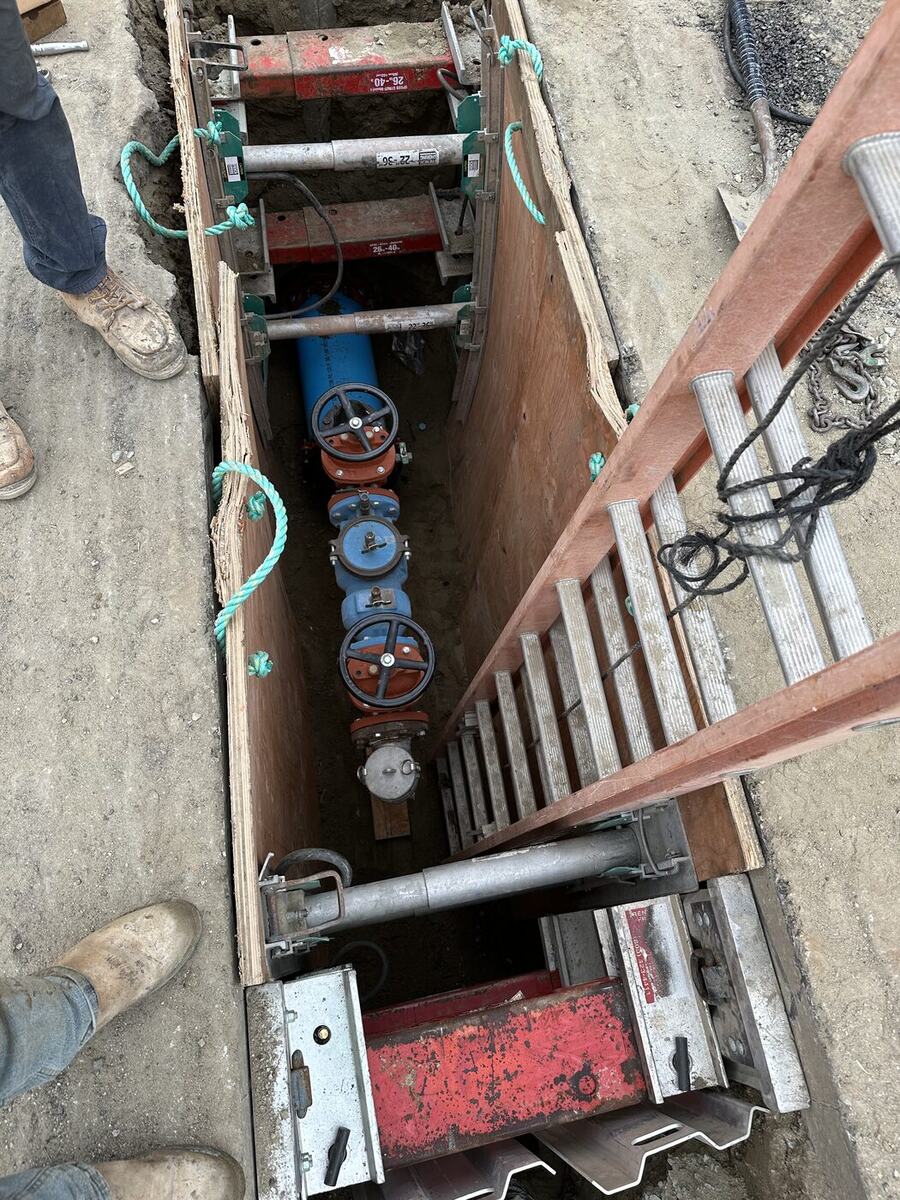
Water services from main to meter, including meter box and backflow assembly installation
Fire hydrant installation and assemblies, coordinated with fireline and site civil plans
Valve installation — gate valves, butterfly valves, air release valves — and valve box setting
Pressure testing, chlorination, and bacteriological testing coordination ahead of agency acceptance
Our Process
01
Plan Review & Utility Coordination
Before mobilization we cross-check the water plan against gas, electric, storm, and sewer alignments in the same corridor, flagging conflicts before they become field problems.
02
Excavation & Trench Prep
Water trenches are typically shallower than sewer but still require proper bedding and required separation from other utilities per agency standards.
03
Pipe Installation
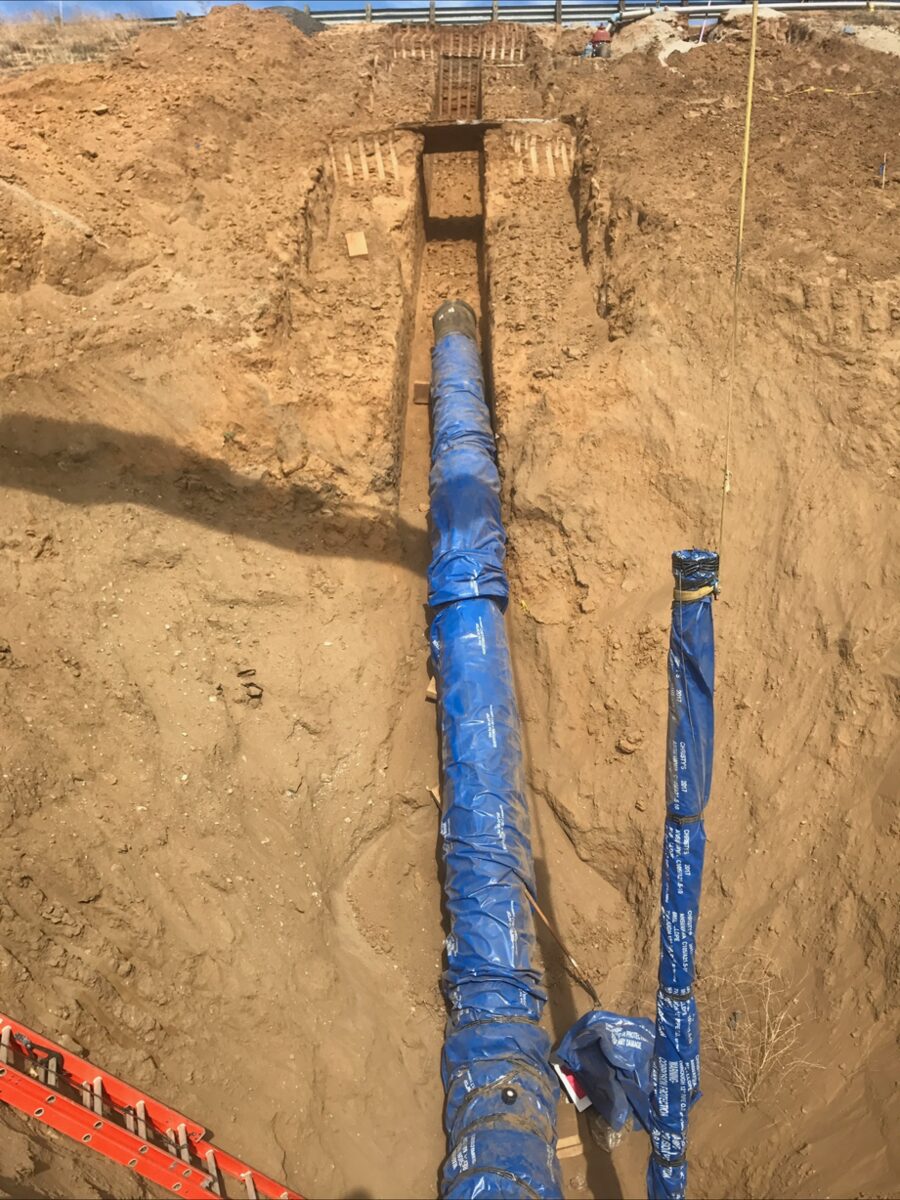
Main pipe (PVC C900, ductile iron) is laid to line and grade, with joints assembled to manufacturer torque and deflection specs — a rushed joint is where a pressure test fails.
04
Appurtenance Installation
Valves, hydrants, services, and backflow assemblies go in as the main is installed, not bolted on as an afterthought once the trench is backfilled.
05
Pressure Testing
Hydrostatic pressure testing per agency spec, held for the required duration, before backfill is signed off.
06
Disinfection & Clearance
Chlorination, flushing, and bacteriological sampling are coordinated with the agency lab so the system clears for service without unnecessary delay.
Materials & Methods
Water main material selection is largely dictated by agency standards: PVC C900/C905 is the common workhorse for domestic mains, ductile iron gets specified for larger diameters or higher structural loading, and copper remains standard for smaller services from main to meter. Brass fittings, resilient-seated gate valves, and backflow assemblies rated for the specific service (domestic vs. irrigation vs. fire) round out the appurtenances — matching the spec exactly matters here, since a substituted fitting is one of the fastest ways to fail an agency inspection.
Public & Private Work
Nearly every private water service ultimately connects to a publicly owned main, which means even private-side work is built to the standards of whichever agency serves that parcel — there's no separate, looser standard for a private developer's water line. What changes between public and private scopes is mostly sequencing and who's coordinating the inspection: on public right-of-way work, we're scheduling around agency inspectors and traffic control; on a private pad or subdivision, we're usually coordinating more directly with the GC's schedule while still meeting the same agency acceptance testing before the system goes live.
FAQ
Water FAQ
What types of underground water lines does Legend Pipeline install?
Legend Pipeline performs underground water utility installation for commercial, development, industrial, and infrastructure projects according to approved project plans and specifications.
Do you install water mains and service lines?
Water scopes can include mainline piping, service connections, valves, fittings, hydrants, and related underground components depending on the project.
Can Legend Pipeline connect to existing water infrastructure?
Projects may include tie-ins and connections to existing water systems when included within the approved scope of work.
Does underground water piping require testing before completion?
Testing and inspection requirements depend on the system, project specifications, and governing authority. Legend Pipeline coordinates its work according to the requirements applicable to each project.
Can Legend Pipeline bid water installation directly from civil plans?
Yes. Project plans and specifications help our team evaluate quantities, materials, connections, site conditions, and the overall underground water scope.
Bidding a Similar Scope?
Have a water scope that needs a bid? Send the plans and any agency standard details that apply, and our estimating team will turn around a number quickly — including flagging anything on the plan set that's likely to raise questions at agency plan check.
Contact
Let's talk about your next project
Bidding opportunities, plan review, partnerships, or general questions — reach out and we'll respond promptly.
Phone(951) 870-8838
LicenseCA Contractors License CL #1080408
Service AreaLA · OC · RIV · SB · SD
Follow